
Lancaster City Older-Home Inspection and Disclosure Guide
August 6, 2026
August 6, 2026
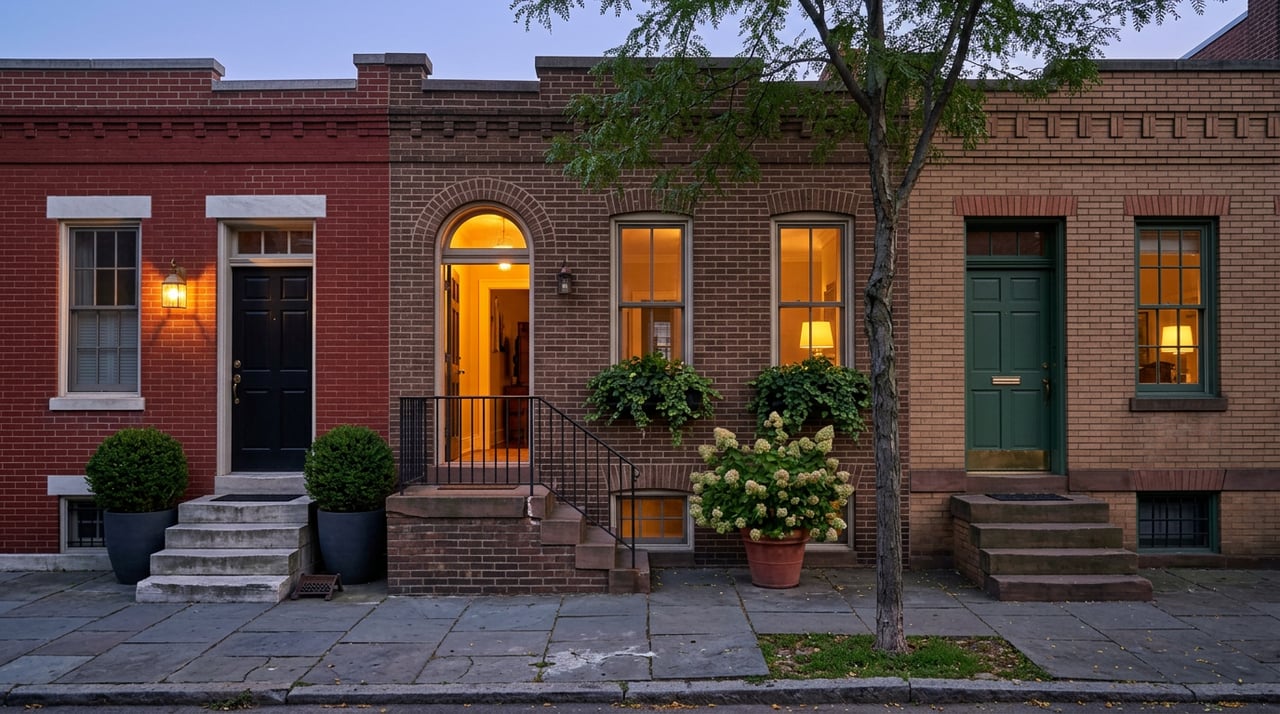
Lancaster city runs on housing that most of the country does not have to think about anymore. Roughly 54% of the city's units were built before 1940, and the median year of construction sits at 1938. In a slower market that would be a footnote. In the market we have right now, with Lancaster County homes closing in about seven days over the three months ending May 2026 per Redfin, it is the whole story.
Here is the thesis worth carrying into a transaction: the same speed that lets a well-priced Lancaster rowhome go under contract in a week is pressuring buyers to trim or waive inspections on exactly the houses where Pennsylvania's Seller Disclosure Law leaves the widest gaps. That mismatch is where deals go sideways, and where sellers who lean on the market's pace expose themselves to a two-year claim window they may not know exists.
Two numbers do most of the work in Lancaster city transactions. One is age. One is pace. They point in opposite directions.
| Metric | Lancaster City | Lancaster County |
|---|---|---|
| Share of housing built before 1940 | ~54% | ~20% |
| Median year built | 1938 | 1978 |
| Predominant type | Row and attached (~52%) | Detached single-family (~55%) |
| Recent days on market | 22 (March 2026, Redfin) | 7 (3 mo. ending May 2026, Redfin) |
County-wide data flatters the city. Move into the city limits and you are shopping in a stock where more than half the walls, wires, and drain lines were installed before the modern electrical code, before radon was on anyone's radar, and before the federal lead-paint rule existed. The Lancaster County Association of Realtors distributes monthly Bright MLS stats that keep confirming the pace, but the composition of what is trading inside the city has not changed. Buyers are being asked to underwrite century-old systems on a timeline built for tract homes.
Pennsylvania's Real Estate Seller Disclosure Law, codified at 68 Pa.C.S. §7301 et seq., requires most residential sellers to complete a Seller's Property Disclosure Statement before the agreement of sale is signed. Most Lancaster listings use the Pennsylvania Association of Realtors form, which tracks the seventeen categories the statute defines and adds room for specifics. The delivery rule under §7305 is strict about the timing: the buyer sees it first, then signs.
The statute defines a material defect as a problem with the property that would have a significant adverse impact on value or that involves an unreasonable risk to people on the land. It also carves out a limit that Lancaster sellers of old homes should read twice. As 49 Pa. Code §35.335a puts it, the fact that a structural element, system, or subsystem is near, at, or beyond the end of its normal useful life is not by itself a material defect.
Read that carefully. A 90-year-old cast-iron drain stack that still drains is not, on the form, a defect. A knob-and-tube circuit that has not shorted is not, on the form, a defect. What the seller has to disclose is what the seller knows. Everything else is the buyer's inspection contingency to catch. On a house from 1910 with three generations of owners, "what the seller knows" is often a narrow slice of what is actually behind the plaster.
If you have watched enough Lancaster city inspections, three items surface in roughly this order.
Radon. Pennsylvania has one of the most serious radon problems in the country. The PA Department of Environmental Protection and Lancaster County's own radon awareness page both report that about 40% of PA homes tested come back at or above the EPA's action level of 4 pCi/L. Lancaster sits inside EPA Zone 1, the highest-potential category. A test kit from a hardware store runs about $20 to $30, and a certified mitigation system is typically a one-day install. The friction is not the fix. The friction is timing: sellers who did not test before listing get blindsided by a short-term test result during the inspection window and end up negotiating a mitigation credit under pressure.
Knob-and-tube and legacy wiring. Older Lancaster homes routinely show original knob-and-tube runs feeding second floors and attics, aluminum branch wiring from mid-century updates, and DIY splices in basements. Standard PA home inspections flag these because insurers do. A buyer's carrier may decline to bind, require a licensed electrician's letter, or condition coverage on partial rewiring. This is the surprise that most often derails financing on a pre-war rowhome, and it rarely shows on the seller's disclosure because the current owner has been living with it uneventfully for years.
Lead paint. Federal law requires sellers of any home built before 1978 to disclose known lead-based paint and hazards and to provide the EPA pamphlet. In a city where more than 60% of the stock predates 1950, that disclosure is not a formality. Families with children under six treat it as a decision point, not a checkbox.
Add wood-destroying-insect inspection, mold in stone basements, and legacy oil tanks in yards where gas conversions happened decades ago, and the older-home inspection bill in Lancaster runs meaningfully above the $300 to $600 range typical for a standard PA inspection.
Here is the piece that changes how a Lancaster seller should think about the disclosure form. Under the RESDL, a buyer generally has up to two years after settlement to bring a claim for a knowingly undisclosed material defect, and §7310 provides for remedies that can include rescission. The seller cannot delegate this duty to the listing agent. Answering "unknown" on questions a reasonable owner-occupant would know the answer to is not the safe move it looks like. Pennsylvania courts have not been kind to sellers who used the box as an escape hatch.
The exemptions matter in Lancaster specifically. Estate sales, fiduciary transfers, and newly built homes that have never been occupied are exempt under §7302 and §7304. A large slice of Lancaster city inventory comes to market through estates, and buyers of those homes should expect a disclosure that reflects limited or no first-hand knowledge. That is not a red flag on its own. It is a reason to spend the inspection dollar the seller did not.
If you are selling. Pre-test for radon before you list. Have an electrician spend an hour with the panel and a few outlets on the top floor so you can answer the wiring questions on the PAR form with something better than "unknown." Keep receipts. The two-year exposure under §7310 is a real number, and the cheapest insurance against it is a disclosure that reflects a seller who actually looked.
If you are buying. In a market with a pending-to-active ratio around 0.84 in July 2026 per Resideline, the temptation to shorten the inspection contingency to win the house is real. On a post-2000 build in a Lancaster County suburb, that is a defensible trade. On a pre-1940 city rowhome, it is a bet against a housing stock that has already outlived its original systems. Keep the radon test, the WDI inspection, and a specialized electrical review in the contingency. If the seller pushes back, ask what changed between their disclosure form and their inspection posture.
Does the seller have to fix what the inspection finds? No. PA law does not require repairs. The disclosure obligation is about what the seller knew before the form was signed. What comes out of the buyer's inspection is a negotiation, not a mandate.
If the seller is an estate, is the disclosure worthless? Not worthless, but limited. Fiduciaries selling under §7302 are exempt from completing the full form. They still must disclose known material defects, and the buyer's inspection carries more weight than usual.
Can a buyer waive the inspection contingency and still sue later under the disclosure law? Waiving inspection does not waive the seller's disclosure duty. A buyer who later discovers a defect the seller knew about and did not disclose can still bring a claim under §7310 within the statutory window. That is a hard case to prove, and not a substitute for looking at the house.
The Lancaster city market rewards moving quickly on the right homes. It also punishes moving quickly on the wrong ones, and the wrong ones are the pre-war houses where the disclosure form legally cannot tell you what an inspector can. If you are getting ready to list a Lancaster home or to write an offer on one, Jasmine Kraybill works these transactions carefully, from pre-listing prep through the inspection response. Let's connect.
Stay up to date on the latest real estate trends.


Experience unmatched expertise, service, & integrity from this Real Estate Aficionado! Jasmine is your go-to guide for finding your dream home in Lancaster & beyond. Let's make your real estate journey an adventure!